Books / Psychodynamic & attachment
Wandlungen und Symbole der Libido
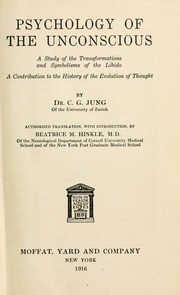
Carl Gustav Jung’s 1912 work discusses symbolism and the concept of libido. Its English translation appeared in 1916 as Psychology of the Unconscious; Jung later revised the work as Symbols of Transformation.
Book details
Author of listed edition: Carl Gustav Jung
Edition: 1912 German edition (Franz Deuticke); 1916 English translation by Beatrice M. Hinkle as Psychology of the Unconscious (Moffat, Yard and Company)
Publisher: Franz Deuticke
Edition year: 1912
Language and origin: German (Switzerland)
Form and genre: Clinical & Theoretical Monograph
Level: Advanced
Historical era: Pre-1919 · Asylum Reform & Early Psychoanalysis
Covers: Jung’s account of symbolism and libido; Comparative mythology and psychological interpretation
APA 7th reference: Jung, C. G. (1912). Wandlungen und Symbole der Libido: Beiträge zur Entwicklungsgeschichte des Denkens [Transformations and symbols of the libido]. Franz Deuticke.
What it is & historical context
Wandlungen und Symbole der Libido appeared in German in 1912. Beatrice M. Hinkle’s English translation was published in 1916 as Psychology of the Unconscious. Jung later revised the work; the revised version appeared in the Collected Works as Symbols of Transformation. These titles refer to related but different versions.
Core clinical themes & arguments
The early work considers mythology, symbolism and libido within Jung’s psychoanalytic framework. Its interpretations should be read as historical theory rather than established evidence about an individual person.
Questions for critical reading
The relationship between historical source material, theoretical interpretation and later revisions is important when reading Jung. The publisher notes that the 1912 and 1952 versions reflect different stages of his thinking.
Who it may suit
Readers interested in the history of analytical psychology and its interpretation of mythology.
Scope & clinical limits
Library and publisher descriptions and the title page of the 1916 translation were consulted. The full 1912 work, later revision and paired book were not reviewed. This record does not evaluate a therapeutic intervention.
Paired academic and clinical scholarship
Paired work: Jung and the Making of Modern Psychology: The Dream of a Science (Sonu Shamdasani, 2003)
Reference: Shamdasani, S. (2003). Jung and the making of modern psychology: The dream of a science. Cambridge University Press.
A historical study of Jung and the development of modern psychology. The complete book was not reviewed for this record.
Source-mapped claims and evidence notes
Claim 1: The 1912 German edition was published by Franz Deuticke. (The catalogue was consulted; the full 1912 work was not reviewed.) [Source 1: University of Tokyo Libraries. Wandlungen und Symbole der Libido: Beiträge zur Entwicklungsgeschichte des Denkens, catalogue record.]
Claim 2: The later Symbols of Transformation revised the earlier work. (The publisher distinguishes the 1912 and 1952 versions; individual changes were not compared.) [Source 3: Princeton University Press. About the Critical Edition of the Works of C. G. Jung.]
Sources and inspection notes
Supports: Catalogue identifies the 1912 Franz Deuticke German edition and its full title.
Supports: Title page identifies the 1916 English translation and translator; the full translation was not reviewed.
Princeton University Press. About the Critical Edition of the Works of C. G. Jung.
Supports: Publisher distinguishes Jung’s 1912 text from his 1952 revision.
Princeton University Press. Collected Works of C. G. Jung, Volume 5: Symbols of Transformation.
Supports: Publisher record describes the collected volume as a revision of the earlier work and gives a 1956 copyright date.