On this page
Books / Chronological timeline
Books in chronological order
All 146 catalogued books ordered by first publication year (from 1621 to the present) across six historical periods in the evolution of psychotherapy and counselling.
Ordering foundational monographs, clinical treatment manuals, critical histories, and lived-experience memoirs chronologically makes visible how each therapeutic paradigm responded to the clinical limits and social conditions of its predecessors.
Era I · Pre-1919 (1621–1919)
Pre-1919 · Asylum Reform & Early Psychoanalysis
9 catalogued works in this period
- 1621
The Anatomy of Melancholy
Original title: The Anatomy of Melancholy, What it is: With all the Kinds, Causes, Symptomes, Prognostickes, and Several Cures of it (English (United Kingdom))
First published in Oxford in 1621 under the name Democritus Junior, Robert Burton’s The Anatomy of Melancholy surveys the causes, symptoms and proposed remedies of melancholy through medical, philosophical and literary sources.
- 1801
Traité médico-philosophique sur l’aliénation mentale, ou la manie
Original title: Traité médico-philosophique sur l’aliénation mentale, ou la manie (French (Paris) · English translation by David Daniel Davis (1806) and Gordon Hickish, David Healy, & Louis C. Charland (2008))
Published in Paris in 1801 (and translated into English in 1806 as A Treatise on Insanity), French physician Philippe Pinel’s Traité médico-philosophique sur l’aliénation mentale ("Medico-Philosophical Treatise on Mental Alienation, or Mania") founded modern clinical psychiatry and the precursor of psychotherapy, condemning chains, bloodletting, and beatings at the Bicêtre and Salpêtrière hospitals, demonstrating that even in raving mania a healthy remnant of reason remains accessible, and introducing "moral treatment" (le traitement moral: psychological, humane, conversational, and occupational care).
- 1889
L’Automatisme psychologique: Essai de psychologie expérimentale sur les formes inférieures de l’activité humaine
Original title: L’Automatisme psychologique: Essai de psychologie expérimentale sur les formes inférieures de l’activité humaine (French)
Pierre Janet’s 1889 study describes experiments and clinical cases involving automatism, awareness and his account of psychological dissociation.
- 1892
The Yellow Wallpaper
Original title: The Yellow Wall-Paper. A Story (English (United States))
Charlotte Perkins Gilman’s short story follows a woman whose physician husband prescribes rest while she becomes increasingly absorbed by the wallpaper in her room. First published in 1892, it draws on the author’s experiences while also using fiction.
- 1895
Studies on Hysteria
Original title: Studien über Hysterie (German (Austria))
By Josef Breuer and Sigmund Freud. The 1895 Viennese clinical monograph introducing the cathartic method, the case of Anna O. and the origins of psychoanalytic psychotherapy.
- 1899Listed edition: 1900
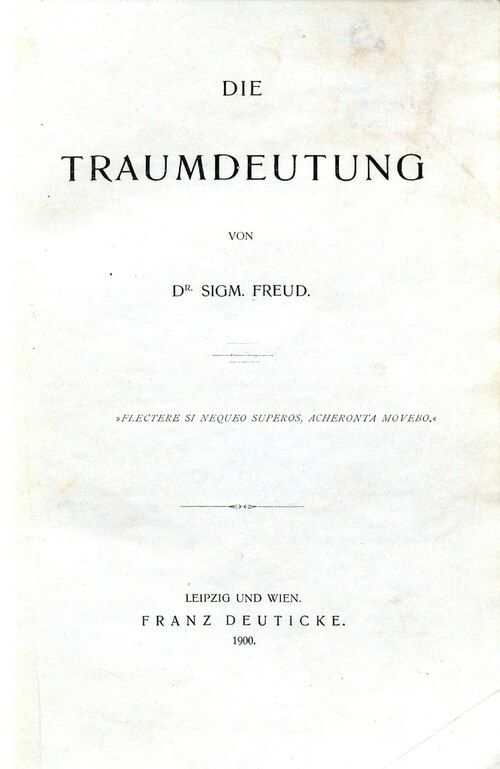
The Interpretation of Dreams
Original title: Die Traumdeutung (German (Austria))
By Sigmund Freud. His foundational treatise (published late 1899, postdated 1900) introducing the topographic model of the mind, manifest and latent dream content, and the dream-work.
- 1908
A Mind That Found Itself: An Autobiography
Clifford Whittingham Beers’s 1908 memoir recounts his experience in psychiatric institutions in Connecticut and the abuse he witnessed. It became influential in his campaign for mental health reform in the United States.
- 1912
Über den nervösen Charakter
Alfred Adler’s 1912 work presents an early account of individual psychology. It appeared in English in 1917 as The Neurotic Constitution.
- 1912
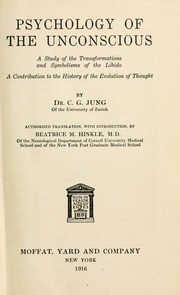
Wandlungen und Symbole der Libido
Carl Gustav Jung’s 1912 work discusses symbolism and the concept of libido. Its English translation appeared in 1916 as Psychology of the Unconscious; Jung later revised the work as Symbols of Transformation.

Era II · 1920–1939 (1920–1939)
1920–1939 · Ego Psychology & Early Child Analysis
9 catalogued works in this period
- 1923
The Ego and the Id
Original title: Das Ich und das Es (German (Austria))
By Sigmund Freud. His 1923 theoretical monograph introducing the structural model of id, ego and superego, reshaping psychoanalytic technique and defence analysis.
- 1924
The Trauma of Birth
Original title: Das Trauma der Geburt und seine Bedeutung für die Psychoanalyse (German (Austria))
Otto Rank’s 1924 book presents a psychoanalytic theory linking anxiety to the experience of birth and separation.
- 1932
The Psycho-Analysis of Children
Original title: Die Psychoanalyse des Kindes (English (United Kingdom))
Melanie Klein’s 1932 book presents her psychoanalytic approach to working with children, including the interpretation of play.
- 1933Listed edition: 1972
Character Analysis
Original title: Charakteranalyse: Technik und Grundlagen für studierende und praktizierende Analytiker (English translation by Vincent R. Carfagno)
Wilhelm Reich’s Character Analysis presents his psychoanalytic account of character and resistance. Later editions also discuss his proposed relationship between psychological defences and muscular tension.
- 1933
The Dynamics of Therapy in a Controlled Relationship
Jessie Taft’s The Dynamics of Therapy in a Controlled Relationship (1933) discusses therapeutic relationships and includes case records involving children.
- 1936
The Ego and the Mechanisms of Defence
Original title: Das Ich und die Abwehrmechanismen (German (Austria))
By Anna Freud. Her 1936 foundational monograph of ego psychology, systematising psychological defence mechanisms and introducing identification with the aggressor.
- 1937
The Neurotic Personality of Our Time
By Karen Horney. Her 1937 cultural and interpersonal revision of psychoanalysis, tracing neurotic anxiety to early relational insecurity and competitive cultural contradictions.
- 1939Listed edition: 1958
Ego Psychology and the Problem of Adaptation
Original title: Ich-Psychologie und Anpassungsproblem (English (United States))
Heinz Hartmann’s account of ego psychology and adaptation was first published in German in 1939. David Rapaport’s English translation appeared in 1958.
- 1939
The Clinical Treatment of the Problem Child
Carl R. Rogers’s 1939 book discusses clinical work with children in the context of child guidance.
Era III · 1940–1959 (1940–1959)
1940–1959 · Object Relations, Existential & Client-Centred
19 catalogued works in this period
- 1941
Escape from Freedom
Original title: Escape from Freedom (UK title: The Fear of Freedom) (English (Germany / United States))
In Escape from Freedom (1941), Erich Fromm offers a social-psychological account of freedom, isolation and authoritarianism. This entry identifies the original US edition.
- 1942
Counseling and Psychotherapy: Newer Concepts in Practice
In Counseling and Psychotherapy: Newer Concepts in Practice (1942), Carl R. Rogers presents his developing non-directive approach to counselling. The book contrasts directive and non-directive methods and includes a transcript of eight interviews with a client identified as Herbert Bryan.
- 1946Listed edition: 2006
Man’s Search for Meaning
Original title: Ein Psycholog erlebt das Konzentrationslager (English (United States))
Viktor Frankl’s account of his experience in Nazi concentration camps and his later presentation of logotherapy. This record identifies the 2006 Beacon Press edition.
- 1946
Psychodrama (Volume 1)
Jacob L. Moreno’s 1946 first volume of Psychodrama collects writings and material on the origins and practice of psychodrama.
- 1946Listed edition: 1955
The Doctor and the Soul: From Psychotherapy to Logotherapy
Original title: Ärztliche Seelsorge: Grundlagen der Logotherapie und Existenzanalyse (German (Vienna) · English translation by Richard and Clara Winston)
Originally drafted before Viktor E. Frankl’s deportation to Auschwitz, confiscated by the SS, and reconstructed from memory for publication in Vienna in 1946 (English translation 1955), The Doctor and the Soul is the foundational clinical textbook of Logotherapy ("Third Viennese School of Psychotherapy"), introducing noögenic neurosis, the triad of creative, experiential, and attitudinal values, paradoxical intention, and dereflection.
- 1947
Play Therapy: The Inner Dynamics of Childhood
Virginia M. Axline’s Play Therapy: The Inner Dynamics of Childhood (1947) describes a non-directive approach to work with children. This entry identifies the Houghton Mifflin edition.
- 1948
Introduction to Group-Analytic Psychotherapy: Studies in the Social Integration of Individuals and Groups
Growing out of his pioneering wartime rehabilitation work with shell-shocked soldiers at Northfield Military Hospital in Birmingham, German-British psychoanalyst S. H. Foulkes (Siegmund Heinrich Fuchs) published Introduction to Group-Analytic Psychotherapy in 1948, founding Group Analysis, defining the therapist as a democratic "conductor" rather than an authoritarian leader, and conceptualizing the group as a communicative "matrix" in which therapy is carried out by the group itself.
- 1950
Personality and Psychotherapy: An Analysis in Terms of Learning, Thinking, and Culture
In Personality and Psychotherapy (1950), John Dollard and Neal E. Miller draw together learning theory, psychoanalytic ideas and social science to develop an account of personality and psychotherapy.
- 1950
Principles of Intensive Psychotherapy
Frieda Fromm-Reichmann’s Principles of Intensive Psychotherapy, first published in 1950, presents her psychoanalytic approach to the therapeutic relationship and intensive psychotherapy.
- 1950
The Meaning of Anxiety
Rollo May’s The Meaning of Anxiety (1950) brings together philosophical, psychological and clinical perspectives on anxiety. This entry identifies the original Ronald Press edition.
- 1951
Client-Centered Therapy: Its Current Practice, Implications, and Theory
Carl R. Rogers’s 1951 book describes client-centred therapy and its implications for practice and theory.
- 1951
Gestalt Therapy: Excitement and Growth in the Human Personality
Published in 1951 by Frederick (Fritz) Perls, Ralph F. Hefferline, and Paul Goodman ("PHG"), Gestalt Therapy: Excitement and Growth in the Human Personality is the foundational charter of Gestalt therapy, replacing intrapsychic splits with a holistic "organism/environment field" theory centred on creative adjustment at the contact boundary, present-moment awareness, and the interruptions to contact.
- 1952
Psychoanalytic Studies of the Personality
A 1952 collection of papers by W. R. D. Fairbairn developing an object-relations theory of personality.
- 1953
The Interpersonal Theory of Psychiatry
By Harry Stack Sullivan. Published posthumously in 1953, setting out his interpersonal field theory, developmental epochs, the self-system and the therapist as participant observer.
- 1954
The Psychiatric Interview
Compiled posthumously from his 1944–1945 Washington School of Psychiatry lectures and published in 1954, Harry Stack Sullivan’s The Psychiatric Interview is the classic treatise on clinical interviewing, defining the interview as a two-person interpersonal communication mediated by "participant observation," mapping its four sequential stages (Formal Inception, Reconnaissance, Detailed Inquiry, and Termination), and teaching clinicians to navigate the patient’s anxiety gradients and security operations.
- 1955
The Psychology of Personal Constructs (Volumes 1 and 2)
George A. Kelly’s two-volume work, published in 1955, presents personal construct psychology and its applications to assessment and psychotherapy.
- 1956
The Art of Loving
In The Art of Loving (1956), Erich Fromm presents a philosophical and social-psychological account of love as a practice. This entry identifies the first edition.
- 1958
Existence: A New Dimension in Psychiatry and Psychology
Edited by Rollo May, Ernest Angel, and Henri F. Ellenberger, Existence: A New Dimension in Psychiatry and Psychology (1958) introduced European phenomenological psychiatry and Daseinsanalyse (Ludwig Binswanger, Eugène Minkowski, Erwin Straus, Roland Kuhn) to North America, establishing existential psychotherapy as a major clinical discipline.
- 1958
Psychotherapy by Reciprocal Inhibition
Joseph Wolpe’s Psychotherapy by Reciprocal Inhibition (1958) presents his theory of reciprocal inhibition and clinical work on anxiety.
Era IV · 1960–1979 (1960–1979)
1960–1979 · Humanistic, Cognitive & Systemic Turn
44 catalogued works in this period
- 1961
A Guide to Rational Living
In A Guide to Rational Living (1961), Albert Ellis and Robert A. Harper present a self-help approach that examines connections between thinking and emotion. This entry identifies the original Prentice-Hall edition.
- 1961
Asylums: Essays on the Social Situation of Mental Patients and Other Inmates
In Asylums (1961), sociologist Erving Goffman examines life in institutions, drawing in part on fieldwork at St Elizabeths Hospital in Washington, DC.
- 1961
Experiences in Groups and Other Papers
Wilfred R. Bion’s 1961 collection brings together papers on group experience and presents his account of work groups and basic assumptions.
- 1961
On Becoming a Person: A Therapist’s View of Psychotherapy
In On Becoming a Person (1961), Carl R. Rogers presents essays on psychotherapy, personal change and relationships. He describes the therapist attitudes central to his person-centred approach.
- 1961
Persuasion and Healing: A Comparative Study of Psychotherapy
Jerome D. Frank’s 1961 book compares psychotherapy with other forms of healing and considers features that therapies may share.
- 1961Listed edition: 2004
The Wretched of the Earth
Original title: Les Damnés de la Terre (English translation from French)
Dictated in the final months of his life while dying of leukaemia at age thirty-six, Martinican psychiatrist Frantz Fanon’s The Wretched of the Earth (1961; Les Damnés de la Terre) is the foundational text of decolonial psychiatry and liberation psychology, concluding in Chapter 5 ("Colonial War and Mental Disorders") with four landmark series of clinical psychiatric cases from Blida-Joinville Hospital in Algeria proving that colonialism is a systematic "breeding ground for mental disorders" for both the colonized and the colonial torturer.
- 1961
Transactional Analysis in Psychotherapy: A Systematic Individual and Social Psychiatry
Eric Berne’s Transactional Analysis in Psychotherapy (1961) presents his approach to understanding personality and social interactions.
- 1962
Learning from Experience
In Learning from Experience (1962), Wilfred R. Bion presents a psychoanalytic theory of emotional experience and thinking, using concepts including alpha-function, reverie and containment.
- 1962
One Flew Over the Cuckoo’s Nest
Ken Kesey’s 1962 novel follows patients on a psychiatric ward, narrated by Chief Bromden. It is a work of fiction that has prompted debate about institutions, authority and psychiatric treatment.
- 1962
Reason and Emotion in Psychotherapy
Albert Ellis’s Reason and Emotion in Psychotherapy was published in 1962. It presents his rational-emotive approach to the relationship between beliefs, emotions and behaviour.
- 1963
The Bell Jar
Sylvia Plath’s novel follows Esther Greenwood, a young woman whose experience of mental illness unfolds in 1950s America. It was first published in 1963 under the name Victoria Lucas.
- 1964
Conjoint Family Therapy: A Guide to Theory and Technique
Virginia Satir’s Conjoint Family Therapy (1964) presents an approach to working with families together. This entry identifies the 1964 publication.
- 1964
Dibs in Search of Self: Personality Development in Play Therapy
In Dibs in Search of Self, first published in 1964, Virginia M. Axline presents an account of play therapy with a young child known as Dibs. The book describes her approach through a single case narrative.
- 1964
Games People Play: The Psychology of Human Relationships
Eric Berne’s Games People Play (1964) describes recurring patterns of social interaction through the framework of transactional analysis.
- 1965
The Maturational Processes and the Facilitating Environment
Donald W. Winnicott’s 1965 collection of twenty-three psychoanalytical papers articulates his core developmental theory: that inherited maturational potential can only unfold within a good-enough facilitating environment characterized by maternal holding, handling, and object-presenting.
- 1967
Depression: Clinical, Experimental, and Theoretical Aspects
In Depression: Clinical, Experimental, and Theoretical Aspects (1967; republished in 1972 as Depression: Causes and Treatment), Aaron T. Beck reported the empirical and clinical studies that overturned the psychoanalytic "anger-turned-inward" hypothesis and established the cognitive model of depression: the negative cognitive triad, depressive schemas, and systematic logical errors.
- 1967
Pragmatics of Human Communication: A Study of Interactional Patterns, Pathologies, and Paradoxes
Paul Watzlawick, Janet Helmick Beavin and Don D. Jackson’s Pragmatics of Human Communication (1967) presents a systemic account of communication, interaction and paradox.
- 1969
Attachment and Loss, Volume 1: Attachment
By John Bowlby. The 1969 foundational volume of the Attachment and Loss trilogy, reformulating human bonding through ethology, evolution and control systems.
- 1969
Love and Will
Rollo May’s Love and Will (1969) considers love, desire and will in the context of existential psychology.
- 1969
The Practice of Behavior Therapy
Joseph Wolpe’s The Practice of Behavior Therapy (1969) presents a clinical approach to behaviour therapy. This entry identifies the first edition.
- 1969
The Will to Meaning: Foundations and Applications of Logotherapy
Based on lectures delivered at Southern Methodist University in Dallas, Viktor E. Frankl’s The Will to Meaning (1969) presents his most systematic English-language synthesis of Logotherapy, organizing the approach around three philosophical pillars: Freedom of Will, Will to Meaning, and Meaning of Life, alongside a sharp critique of homeostasis, pan-determinism, and "nothing-but-ness" reductionism.
- 1970Listed edition: 2020
The Theory and Practice of Group Psychotherapy
Irvin Yalom and Molyn Leszcz’s sixth edition discusses group psychotherapy, therapeutic factors and clinical practice. The first edition appeared in 1970.
- 1971
Playing and Reality
D. W. Winnicott’s Playing and Reality (1971) brings together writing on play, transitional phenomena, object relations and cultural experience.
- 1971
The Analysis of the Self: A Systematic Approach to the Psychoanalytic Treatment of Narcissistic Personality Disorders
Heinz Kohut’s The Analysis of the Self (1971) presents a psychoanalytic account of narcissistic personality disorders and therapeutic relationships.
- 1972
Peoplemaking
Virginia Satir’s Peoplemaking, first published in 1972, discusses self-worth, communication and family relationships. A revised work appeared in 1988 as The New Peoplemaking.
- 1972
Steps to an Ecology of Mind: Collected Essays in Anthropology, Psychiatry, Evolution, and Epistemology
Collecting thirty-five years of interdisciplinary essays by British anthropologist and cybernetician Gregory Bateson, Steps to an Ecology of Mind (1972) is the epistemological bedrock of systemic family therapy, reprinting the famous 1956 paper "Toward a Theory of Schizophrenia" (introducing the "double bind"), "The Cybernetics of 'Self': A Theory of Alcoholism," and his theory of "Deutero-Learning" (learning to learn) and "information as a difference which makes a difference."
- 1972
What Do You Say After You Say Hello? The Psychology of Human Destiny
Eric Berne’s What Do You Say After You Say Hello? (1972) presents his transactional-analysis account of life scripts and human relationships.
- 1973
Attachment and Loss, Volume 2: Separation: Anxiety and Anger
By John Bowlby. The 1973 second volume of Attachment and Loss, examining separation distress, anxious attachment, anger and internal working models.
- 1973
Uncommon Therapy: The Psychiatric Techniques of Milton H. Erickson, M.D.
Jay Haley’s Uncommon Therapy, first published in 1973, presents case descriptions and interpretations of psychiatrist Milton H. Erickson’s approach to therapy.
- 1974Listed edition: 2011
Change: Principles of Problem Formation and Problem Resolution
Paul Watzlawick, John H. Weakland and Richard Fisch’s Change, first published in 1974, presents a problem-focused account of persistence and change in psychotherapy.
- 1974
Families and Family Therapy
Salvador Minuchin’s Families and Family Therapy (1974) presents a structural approach to family therapy using clinical examples and session transcripts.
- 1974
The New Sex Therapy: Active Treatment of Sexual Dysfunctions
Helen Singer Kaplan’s The New Sex Therapy (1974) presents an approach to sexual difficulties that combines behavioural exercises with attention to individual and relationship concerns.
- 1975
Borderline Conditions and Pathological Narcissism
Otto F. Kernberg’s 1975 book presents a psychoanalytic account of borderline conditions and pathological narcissism.
- 1975Listed edition: 1978
Paradox and Counterparadox: A New Model in the Therapy of the Family in Schizophrenic Transaction
Original title: Paradosso e controparadosso: Un nuovo modello nella terapia della famiglia a transazione schizofrenica (Italian (Milan) · English translation by Elisabeth V. Burt)
Mara Selvini Palazzoli, Luigi Boscolo, Gianfranco Cecchin and Giuliana Prata present a family therapy model in Paradox and Counterparadox. This entry describes the 1978 English translation of their Italian work.
- 1976
Cognitive Therapy and the Emotional Disorders
In Cognitive Therapy and the Emotional Disorders (1976), Aaron T. Beck expanded his cognitive model from depression to the full spectrum of neurotic disorders, introducing the concept of "cognitive specificity" (loss in depression, danger in anxiety, transgression in anger) and contrasting "automatic thoughts" with accessible conscious meaning.
- 1976
Problem-Solving Therapy: New Strategies for Effective Family Therapy
Jay Haley’s Problem-Solving Therapy (1976) presents a family-oriented approach to identifying and addressing problems in therapy.
- 1976
Toward a New Psychology of Women
In Toward a New Psychology of Women (1976; 2nd ed. 1986), psychiatrist and psychoanalyst Jean Baker Miller exposed how traditional theories of human development (Freud, Erikson, Mahler) treated male-normed separation and self-sufficiency as the pinnacle of maturity while pathologizing women’s orientation toward relationship and care as "dependency", launching Relational-Cultural Theory (RCT) and demonstrating how dominant-subordinate power hierarchies distort psychological life.
- 1977
Cognitive-Behavior Modification: An Integrative Approach
Donald Meichenbaum’s Cognitive-Behavior Modification (1977) presents an approach to behaviour change that attends to thinking and self-instruction. It includes discussions of self-instructional training and stress inoculation training.
- 1977
The Restoration of the Self
Heinz Kohut’s The Restoration of the Self (1977) develops his psychoanalytic theory of the self and selfobject relationships.
- 1978
Family Therapy in Clinical Practice
Murray Bowen’s Family Therapy in Clinical Practice, first published in 1978, collects writings on his family systems approach.
- 1978
Focusing
In Focusing, first published in 1978, Eugene T. Gendlin describes a way of attending to an initially unclear bodily sense of a situation and sets out a series of focusing steps.
- 1978Listed edition: 2015
Patterns of Attachment: A Psychological Study of the Strange Situation
By Mary D. Salter Ainsworth, Mary C. Blehar, Everett Waters and Sally Wall. This 1978 monograph reports a longitudinal study of infant attachment and the Strange Situation procedure.
- 1978
Psychosomatic Families: Anorexia Nervosa in Context
In Psychosomatic Families (1978), Salvador Minuchin, Bernice L. Rosman and Lester Baker set out a structural family therapy account of illness, including anorexia nervosa. The book is a historical contribution to family therapy, not proof that family patterns cause eating disorders.
- 1979Listed edition: 1987
Cognitive Therapy of Depression
Cognitive Therapy of Depression (1979), by Aaron T. Beck, A. John Rush, Brian F. Shaw and Gary Emery, presents a structured approach to cognitive therapy for depression.
Era V · 1980–2009 (1980–2009)
1980–2009 · Evidence-Based, Trauma & Integrative Era
59 catalogued works in this period
- 1980
Existential Psychotherapy
In Existential Psychotherapy (1980), Stanford psychiatrist Irvin D. Yalom brought rigorous clinical structure to existential therapy, reformulating psychodynamic conflict around four "ultimate concerns" of human existence (Death, Freedom, Existential Isolation, and Meaninglessness) that generate existential anxiety and defensive psychopathology.
- 1981Listed edition: 2022
Counseling the Culturally Diverse: Theory and Practice
Original title: Counseling the Culturally Different: Theory and Practice (English (United States))
The ninth edition of Counseling the Culturally Diverse: Theory and Practice (2022) examines culture, counselling and social justice. The book developed from Counseling the Culturally Different, first published in 1981.
- 1983
Object Relations in Psychoanalytic Theory
In Object Relations in Psychoanalytic Theory (1983), Jay R. Greenberg and Stephen A. Mitchell organized a century of psychoanalytic thought around a fundamental conceptual divide between the classical "drive/structure model" (Freud, Hartmann) and the "relational/structure model" (Sullivan, Fairbairn, Winnicott, Kohut), alongside mixed-model theorists (Klein, Kernberg).
- 1984
Interpersonal Psychotherapy of Depression
Interpersonal Psychotherapy of Depression (1984), by Gerald L. Klerman, Myrna M. Weissman, Bruce J. Rounsaville and Eve S. Chevron, presents a time-limited approach to depression that focuses on current relationships and life events.
- 1985
Genograms in Family Assessment
Monica McGoldrick and Randy Gerson’s 1985 book introduces genograms as a way to organise information gathered in family assessment.
- 1985
Keys to Solution in Brief Therapy
Written at the Brief Family Therapy Center (BFTC) in Milwaukee, Steve de Shazer’s Keys to Solution in Brief Therapy (1985) marks the pivotal transition from MRI problem-focused brief therapy to Solution-Focused Brief Therapy (SFBT), arguing that solutions do not need to match the complexity or history of the complaint, that "resistance" is obsolete when therapists cooperate with client patterns, and that standardized "skeleton key" interventions (such as the Formula First Session Task) can unlock a wide array of problems.
- 1985Listed edition: 1988
The Clinical Diary of Sándor Ferenczi
Original title: Ohne Sympathie keine Heilung: Das klinische Tagebuch von 1932 (German / Hungarian (Budapest) · English translation by Michael Balint and Nicola Zarday Jackson)
Written between January and October 1932 and published posthumously over fifty years later, The Clinical Diary of Sándor Ferenczi records his radical clinical experiments with severely traumatized patients, his restoration of real childhood sexual and emotional abuse to psychoanalysis, and his critique of cold, authoritarian analytic neutrality.
- 1985
The Man Who Mistook His Wife for a Hat and Other Clinical Tales
Oliver Sacks’s 1985 collection presents clinical narratives about people living with neurological conditions. The cases explore how neurological differences affect individual lives.
- 1987Listed edition: 1990
Emotion in Psychotherapy: Affect, Cognition, and the Process of Change
Leslie S. Greenberg and Jeremy D. Safran’s Emotion in Psychotherapy (1987) examines emotion, cognition and processes of change in psychotherapy.
- 1988
A Secure Base: Clinical Applications of Attachment Theory
By John Bowlby. His account of attachment theory and how it bears on parent-child relationships and clinical work.
- 1988
Clues: Investigating Solutions in Brief Therapy
Steve de Shazer’s Clues (1988) describes solution-focused brief therapy and uses cases and a computer-assisted analysis to explore how solutions develop.
- 1988
Relational Concepts in Psychoanalysis: An Integration
In Relational Concepts in Psychoanalysis (1988), Stephen A. Mitchell moved from historical critique to constructive synthesis, integrating British object relations, American interpersonal psychoanalysis, and self psychology into a unified "relational-conflict" model centred on the relational matrix.
- 1988
The Bonds of Love: Psychoanalysis, Feminism, and the Problem of Domination
In The Bonds of Love (1988), Jessica Benjamin examines psychoanalysis, feminism and domination, including questions of recognition and independence in relationships.
- 1989
Love’s Executioner and Other Tales of Psychotherapy
Irvin D. Yalom’s Love’s Executioner and Other Tales of Psychotherapy (1989) presents ten psychotherapy narratives about relationships, loss and other existential concerns.
- 1990Listed edition: 1992
Darkness Visible: A Memoir of Madness
William Styron’s Darkness Visible (1990) recounts his experience of severe depression and recovery. His memoir considers the difficulty of communicating psychological pain and the stigma surrounding depression and suicide.
- 1990
Narrative Means to Therapeutic Ends
Michael White and David Epston’s 1990 book describes narrative approaches to therapy and the use of writing in therapeutic work.
- 1991Listed edition: 2013
Motivational Interviewing: Helping People Change
Original title: Motivational Interviewing: Preparing People to Change Addictive Behavior (English (United States / United Kingdom))
William R. Miller and Stephen Rollnick’s third edition presents motivational interviewing as a collaborative approach to conversations about change. This entry describes the edition catalogued with a 2013 copyright date.
- 1992
Living at the Boundary: The Collected Works of Laura Perls
A collection of Laura Perls’s writings and clinical reflections on Gestalt therapy, edited by Joe Wysong and published in 1992.
- 1992
Trauma and Recovery
First published in 1992, Judith Lewis Herman’s Trauma and Recovery examines connections between interpersonal violence, political violence and psychological trauma. It proposes a framework for understanding prolonged trauma and describes three phases of recovery.
- 1992
When Nietzsche Wept: A Novel of Obsession
Irvin D. Yalom’s 1992 novel imagines an encounter between physician Josef Breuer and philosopher Friedrich Nietzsche in nineteenth-century Vienna.
- 1993Listed edition: 2019
An Introduction to Counselling and Psychotherapy: Theory, Research and Practice
Original title: An Introduction to Counselling (English (United Kingdom))
John McLeod’s introductory textbook surveys counselling and psychotherapy theory, research and practice. This record describes the sixth edition, published in 2019.
- 1993
Cognitive-Behavioral Treatment of Borderline Personality Disorder
Marsha M. Linehan’s 1993 clinical guide describes dialectical behavior therapy (DBT) for borderline personality disorder, including a balance of acceptance and change.
- 1993Listed edition: 2015
DBT Skills Training Manual
Marsha M. Linehan’s DBT Skills Training Manual presents skills used in dialectical behaviour therapy, including mindfulness, distress tolerance, emotion regulation and interpersonal effectiveness. The second edition was published in 2015.
- 1993Listed edition: 1994
Girl, Interrupted
Susanna Kaysen’s Girl, Interrupted (1993) recounts her stay at McLean Hospital as a teenager. Combining recollection with hospital records, the memoir questions psychiatric diagnosis and explores life on the ward.
- 1993
Reinventing Your Life: The Breakthrough Program to End Negative Behavior and Feel Great Again
Written for clients and general readers by Jeffrey E. Young and Janet S. Klosko (1993), Reinventing Your Life translates Schema Therapy into the accessible concept of "lifetraps", self-defeating emotional and relational patterns rooted in childhood such as Abandonment, Mistrust and Abuse, Emotional Deprivation, Defectiveness, and Unrelenting Standards.
- 1994
Changing for Good: A Revolutionary Six-Stage Program for Overcoming Bad Habits and Moving Your Life Positively Forward
Changing for Good (1994) introduces the transtheoretical model of behaviour change for a general audience. James O. Prochaska, John C. Norcross and Carlo C. DiClemente describe stages and processes that they propose can help explain attempts to change habits.
- 1994
Family Based Services: A Solution-Focused Approach
Insoo Kim Berg’s Family Based Services: A Solution-Focused Approach (1994) describes an approach to work in child welfare and family services.
- 1994
Writings for a Liberation Psychology
Edited and translated by Adrianne Aron and Shawn Corne five years after Salvadoran social psychologist and Jesuit priest Ignacio Martín-Baró was assassinated by a U.S.-trained military squad in San Salvador in November 1989, Writings for a Liberation Psychology (1994) is the founding charter of Latin American Liberation Psychology (Psicología de la Liberación), calling on psychology to abandon North American individualistic scientism, adopt a "preferential option for the oppressed majority," and replace intrapsychic trauma models with "psychosocial trauma," Paulo Freire’s concientización, and the recovery of historical memory.
- 1995Listed edition: 1996
An Unquiet Mind: A Memoir of Moods and Madness
Psychologist Kay Redfield Jamison’s memoir describes her experience of bipolar illness alongside her career studying mood disorders. First published in 1995, it reflects on illness, treatment and disclosure.
- 1995Listed edition: 2020
Cognitive Behavior Therapy: Basics and Beyond
Judith S. Beck’s clinical guide introduces cognitive behavioural therapy and its application in treatment. The third edition (2020) adds a recovery-oriented emphasis to the traditional CBT approach.
- 1995Listed edition: 2018
Eye Movement Desensitization and Reprocessing (EMDR) Therapy: Basic Principles, Protocols, and Procedures
Francine Shapiro’s clinical manual presents eye movement desensitization and reprocessing (EMDR) therapy, its theoretical framework and its treatment procedures.
- 1995Listed edition: 2019
Internal Family Systems Therapy
Richard C. Schwartz and Martha Sweezy’s second edition presents internal family systems (IFS) therapy, a clinical approach that uses a model of parts and Self.
- 1995Listed edition: 2015
Mind Over Mood: Change How You Feel by Changing the Way You Think
Dennis Greenberger and Christine A. Padesky’s Mind Over Mood is a cognitive behavioural workbook for readers working on their own or with a therapist. This record describes the second edition.
- 1996Listed edition: 2019
The Practice of Emotionally Focused Couple Therapy: Creating Connection
In this 2019 third edition, Susan M. Johnson describes emotionally focused couple therapy, an approach that attends to attachment, emotion and patterns of interaction between partners.
- 1998
Treating the Trauma of Rape: Cognitive-Behavioral Therapy for PTSD
In Treating the Trauma of Rape (1998), Edna B. Foa and Barbara Olasov Rothbaum present a cognitive-behavioural approach to post-traumatic stress disorder (PTSD) after rape.
- 1999
Acceptance and Commitment Therapy: An Experiential Approach to Behavior Change
A 1999 clinical book by Steven C. Hayes, Kirk D. Strosahl and Kelly G. Wilson introducing acceptance and commitment therapy (ACT).
- 1999Listed edition: 2020
Helping Skills: Facilitating Exploration, Insight, and Action
Clara E. Hill’s Helping Skills presents a three-stage model of helping: exploration, insight and action. This record describes the fifth edition; Hill and Karen M. O’Brien wrote the 1999 first edition.
- 2000
Negotiating the Therapeutic Alliance: A Relational Treatment Guide
Jeremy D. Safran and J. Christopher Muran’s Negotiating the Therapeutic Alliance (2000) presents a relational approach to understanding and addressing strains in the therapeutic alliance.
- 2001
Depression in Context: Strategies for Guided Action
Depression in Context (2001), by Christopher R. Martell, Michael E. Addis and Neil S. Jacobson, presents a contextual behavioural activation approach to depression.
- 2001
Relational Frame Theory: A Post-Skinnerian Account of Human Language and Cognition
Relational Frame Theory (2001), edited by Steven C. Hayes, Dermot Barnes-Holmes and Bryan Roche, presents a behaviour-analytic account of language and cognition.
- 2001
The Great Psychotherapy Debate: The Evidence for What Makes Psychotherapy Work
Bruce E. Wampold’s The Great Psychotherapy Debate compares explanations for how psychotherapy works. The 2015 second edition, co-authored with Zac E. Imel, presents a contextual model alongside a discussion of research on treatments, therapeutic relationships and therapist effects.
- 2001Listed edition: 2015
The Noonday Demon: An Atlas of Depression
Andrew Solomon’s The Noonday Demon combines personal experience, interviews and reporting on depression. This entry identifies the updated 2015 edition.
- 2002
Affect Regulation, Mentalization, and the Development of the Self
Affect Regulation, Mentalization, and the Development of the Self (2002) presents Peter Fonagy and colleagues’ account of mentalization, attachment and emotional development.
- 2002Listed edition: 2015
Emotion-Focused Therapy: Coaching Clients to Work Through Their Feelings
In Emotion-Focused Therapy: Coaching Clients to Work Through Their Feelings, Leslie S. Greenberg describes emotion coaching and the role of emotional awareness and transformation in therapy. The book first appeared in 2002; this entry identifies the 2015 second edition.
- 2002Listed edition: 2013
Mindfulness-Based Cognitive Therapy for Depression
Original title: Mindfulness-Based Cognitive Therapy for Depression: A New Approach to Preventing Relapse (English (Canada / United Kingdom))
Zindel V. Segal, J. Mark G. Williams and John D. Teasdale present mindfulness-based cognitive therapy (MBCT), an eight-week group programme developed to help prevent depressive relapse. This record describes the second edition.
- 2002Listed edition: 2019
Psychotherapy Relationships That Work: Volume 1: Evidence-Based Therapist Contributions
The first volume of the 2019 third edition, edited by John C. Norcross and Michael J. Lambert, examines research on therapist contributions to the psychotherapy relationship.
- 2002Listed edition: 2003
The Gift of Therapy: An Open Letter to a New Generation of Therapists and Their Patients
Irvin D. Yalom’s collection of short reflections discusses psychotherapy and the relationship between therapist and client. The edition listed here is the 2003 Harper Perennial paperback.
- 2003
Schema Therapy: A Practitioner’s Guide
Jeffrey E. Young, Janet S. Klosko and Marjorie E. Weishaar present schema therapy in this 2003 clinical guide. The authors describe a model of persistent patterns and ways of working with them in psychotherapy.
- 2004
Psychotherapy for Borderline Personality Disorder: Mentalization-Based Treatment
In Psychotherapy for Borderline Personality Disorder: Mentalization-Based Treatment (2004), Anthony Bateman and Peter Fonagy translate developmental mentalization theory into a structured, empirically validated clinical protocol for borderline personality disorder (BPD), emphasizing the therapist’s "not-knowing stance" and the calibration of interventions to the patient’s emotional arousal.
- 2005
Cognitive Therapy for Challenging Problems: What to Do When the Basics Don’t Work
In Cognitive Therapy for Challenging Problems (2005), Judith S. Beck addresses the clinical impasses that arise when standard CBT protocols encounter entrenched personality pathology, alliance ruptures, chronic avoidance, or therapist cognitions that interfere with treatment.
- 2005
Get Out of Your Mind and Into Your Life: The New Acceptance and Commitment Therapy
A 2005 self-help workbook by Steven C. Hayes with Spencer Smith introducing ideas and exercises associated with acceptance and commitment therapy (ACT).
- 2005
Working at Relational Depth in Counselling and Psychotherapy
Dave Mearns and Mick Cooper’s 2005 book explores relational depth in counselling and psychotherapy, describing moments of close contact and engagement between people.
- 2006
Mating in Captivity: Unlocking Erotic Intelligence
Translated into nearly thirty languages, Belgian-born systemic and psychodynamic couple therapist Esther Perel’s Mating in Captivity (2006) examines the central paradox of modern romantic relationships: that the very ingredients that cultivate domestic love and security (predictability, egalitarian fairness, protective caretaking, and fusion) frequently suffocate erotic desire, which thrives on space, mystery, play, and the separateness of the Other ("fire needs air").
- 2006
Trauma and the Body: A Sensorimotor Approach to Psychotherapy
In Trauma and the Body (2006), Pat Ogden, Kekuni Minton and Clare Pain describe sensorimotor psychotherapy, an approach that attends to bodily experience alongside thoughts and emotions in psychotherapy.
- 2007
Maps of Narrative Practice
Michael White’s 2007 book describes narrative practice through different kinds of therapeutic conversations, illustrated with case material and diagrams.
- 2008
Hold Me Tight: Seven Conversations for a Lifetime of Love
Sue Johnson’s Hold Me Tight (2008) presents relationship ideas and conversations informed by emotionally focused couple therapy and attachment theory.
- 2008
Motivational Interviewing in Health Care: Helping Patients Change Behavior
Stephen Rollnick, William R. Miller and Christopher C. Butler describe motivational interviewing in health care conversations. This record concerns the first edition, published in 2008.
- 2009
Collaborative Case Conceptualization: Working Effectively with Clients in Cognitive-Behavioral Therapy
In Collaborative Case Conceptualization (2009), Willem Kuyken, Christine A. Padesky, and Robert Dudley address the notoriously weak inter-rater reliability of traditional case formulations by proposing a structured, three-level model (descriptive, cross-sectional, and longitudinal) grounded in collaborative empiricism and client resilience.
- 2009
The Compassionate Mind
In The Compassionate Mind (2009), British clinical psychologist Paul Gilbert integrates evolutionary psychology, attachment theory, affective neuroscience, and Buddhist contemplation to explain why human beings are so vulnerable to shame and self-criticism, introducing the three-system model of affect regulation (Threat, Drive, and Soothing/Affiliative) that underpins Compassion-Focused Therapy (CFT).
Era VI · 2010–Present (2010–Present)
2010–Present · Contextual, Pluralistic & Liberation Era
6 catalogued works in this period
- 2010
Compassion Focused Therapy: Distinctive Features
In Compassion Focused Therapy: Distinctive Features (2010), Paul Gilbert provides a structured 30-point clinical manual for therapists, dividing Compassion-Focused Therapy into 15 theoretical features (evolutionary functional analysis, social mentality theory, forms and functions of self-criticism, fears of compassion) and 15 practical techniques (compassionate formulation, chairwork, imagery, and soothing rhythm breathing).
- 2011
Pluralistic Counselling and Psychotherapy
Mick Cooper and John McLeod present a pluralistic framework for counselling and psychotherapy, emphasising collaboration about the client’s goals, tasks and methods.
- 2011
Unified Protocol for Transdiagnostic Treatment of Emotional Disorders: Therapist Guide
The Unified Protocol therapist guide presents a transdiagnostic cognitive behavioural approach developed by David H. Barlow and colleagues for emotional disorders. It describes shared treatment principles rather than a separate manual for each diagnosis.
- 2014
The Body Keeps the Score: Brain, Mind, and Body in the Healing of Trauma
Bessel van der Kolk’s book discusses trauma, the body and approaches to recovery. It was first published in 2014.
- 2018
The Power Threat Meaning Framework: Towards the Identification of Patterns in Emotional Distress, Unusual Experiences and Troubled or Troubling Behaviour, as an Alternative to Functional Psychiatric Diagnosis
Published in 2018 by the British Psychological Society’s Division of Clinical Psychology and led by clinical psychologists Lucy Johnstone and Mary Boyle alongside service-user/survivor researchers (Eleanor Longden, Jacqui Dillon, John Read, David Pilgrim, John Cromby), The Power Threat Meaning Framework (PTMF) provides a comprehensive, evidence-based alternative to DSM and ICD functional psychiatric diagnosis, replacing the medical question "What is wrong with you?" with four interconnected questions examining how the negative operation of Power creates Threats, how personal and cultural Meaning shapes those threats, and what Threat Responses the person had to use to survive.
- 2020
Building a Life Worth Living: A Memoir
Marsha M. Linehan’s memoir describes her experiences of psychiatric treatment and the development of dialectical behaviour therapy (DBT).
Educational draft · Subject review pending